
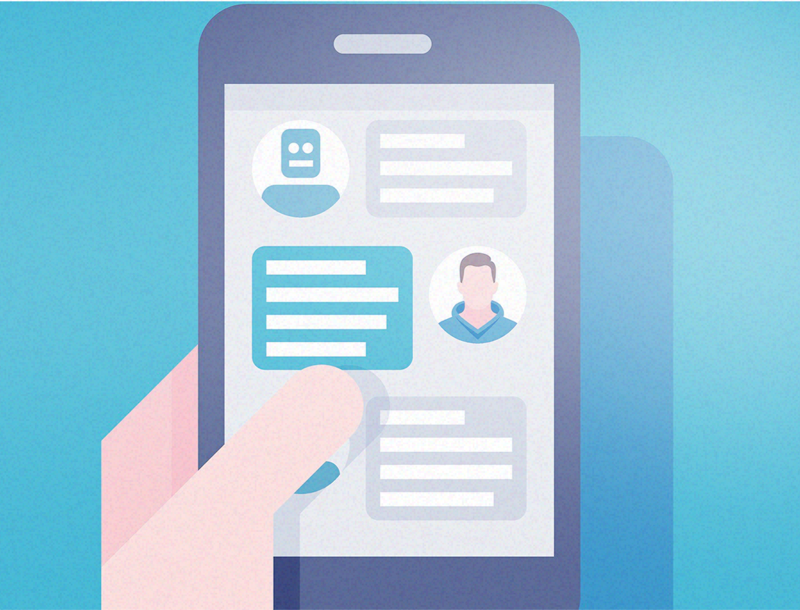
Chatbots and other voice assistants are emerging in a variety of different industries. Further, thanks to cloud-based, AI technology skilled developers are now able to build a variety of next-gen apps that incorporate conversational interfaces. These enable functionality, such as understanding natural language, conversing with users, even listening to voice commands.
How does this all work? In the following paragraphs, we’ll review some key points relating to serverless architecture and chatbots.
Cloud-Native Services
For companies that don’t wish to invest in hardware and the ongoing management of servers, cloud-native services offer the infrastructure required to develop and deploy chatbots. These personal assistants can use natural language processing (NLP) to receive inputs from users, conduct relevant searches and return results, complete repetitive tasks, even take actions that the user requests. These bots can be driven by both keyword input and speech.
Chatbot Categories
While many chatbots are multifunctional, it’s helpful to understand some of the basic usage groups for these tools.
Application Bots
These are the bots that provide an interface to popular apps such as Alexa, Google Assistant, and Siri. These are generally developed to work with a voice interface and are compatible with multiple devices. One of the most powerful functions of these devices is automation. Users can request that items be added to their calendars, to send simple emails, even order food service.
Informational Bots
This is a simple, common form of a chatbot. These return information to customers based on their inquiries. An informational bot might share news updates, the user’s appointment schedule, information from social and email accounts, sports scores, weather, and news updates.
IoT Bots
An IoT bot allows users to engage with a variety of smart devices via a conversational interface. These devices include smart speakers, smartwatches, and smart home systems.
Business Productivity Bots
These enterprise bots perform a wide range of tasks to automate processes, boost customer experience, create better interactions with clients, and reduce customer service costs. They can be ordered to complete such tasks as notifying users of market changes.
Cloud Providers and Chatbot Development
Cloud providers like Amazon and Google have services that allow developers to build conversational interfaces that work with text and voice. One example of this is Google’s Dialog Flow. Amazon Lex is another. Each of these uses standard usage patterns and integrations. While these cloud-native services certainly have their advantages, be aware that there are some roadblocks when it comes to building truly customized, flexible solutions.
Goals of Building an Enterprise Chatbot Solution
While every business has its own goals when it comes to deploying a serverless chatbot solution, there are several objectives that are common among them. These include:
- Integration with any messenger app
- Secure network connection that protects the user’s credentials
- Natural language understanding that understands the intent
- WebSocket enabled integration with web application
Features of Conversational Interfaces
Thanks to advances in automatic speech recognition, natural language function, and deep learning, conversational interfaces have advanced significantly. As a result, chatbots can now carry out a more complex conversation while understanding the context and meaning of the user’s input.
Another feature is the ability to combine the serverless approach with Lambda functions. This provides the advantages of managed cloud services without the costs.
Amazon Lex features built-in support of Slack, Twilio SMS, and Facebook Messenger. Clients who wish to integrate MS Teams or other messenger apps will have to opt for a custom-built solution.
A Chatbot Conversation
Here’s a simple example of the functionality of a chatbot conversation.
User: “Make an airline reservation, leaving August 15th.”
Bot: (requires clarification) Are you leaving from the local airport?”
User: Yes
Bot: (requires more clarification) What’s the destination city?
User: Chicago
Bot: Midway or O’hare?
User: O’hare
Now the bot has enough information to start the booking process.
Depending on the solution the client opts for, this solution could be executed with a Lex powered bot that uses WebSocket APIs.
Of course, this is just one example of an exchange. Other solutions could allow users to schedule sales appointments or place orders for products. In addition to this, chatbot solutions must also integrate needed security to ensure that functions such as user authentications work appropriately.
Scalability and Chatbot Solutions
Businesses that anticipate growth may be attracted to the scalability of serverless chatbot solutions. Because there’s no need to add additional hardware, it’s much easier to go from a small cluster of end-users to hundreds of them. Even better, all of this can be done with no need to increase staff to manage resources.
Your Chatbot Solution
Brainberry is ready to deploy a remote team to design and implement a chatbot solution based on serverless architecture. Our experts can help with every step, from requirements gathering to execution to support. If you’ve thought you didn’t have the infrastructure to use chatbots, talk to us first!